Change the Story
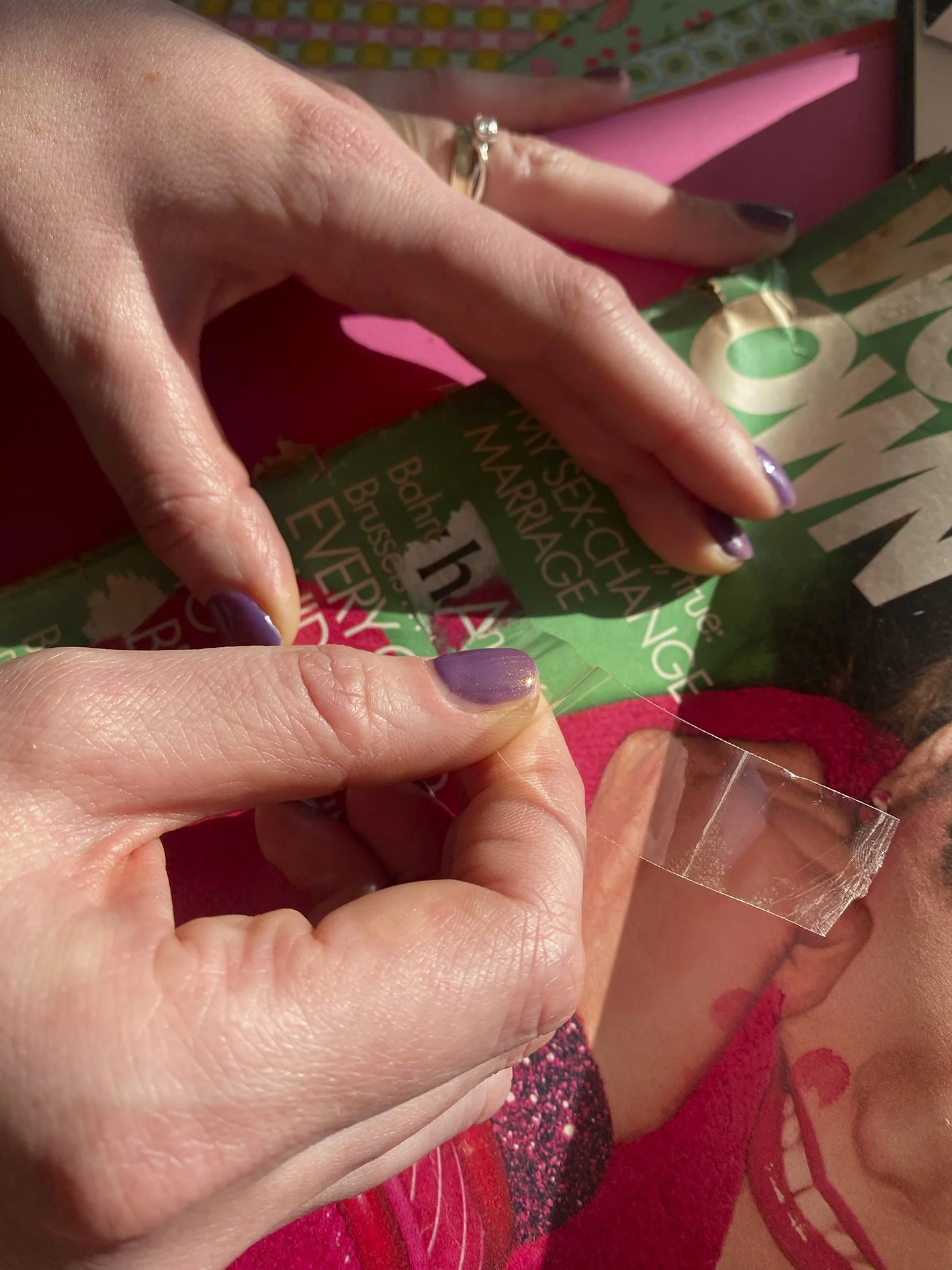
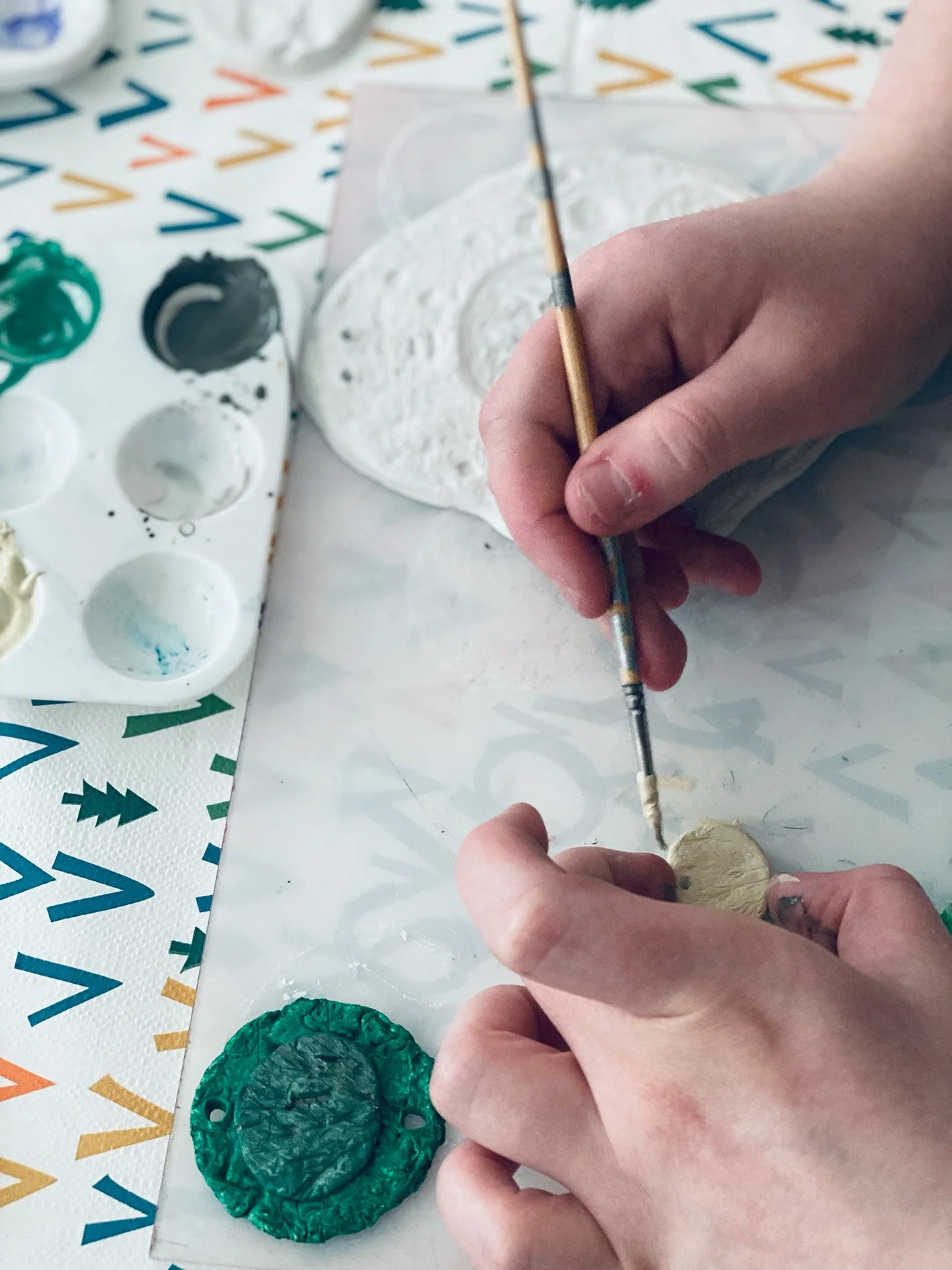
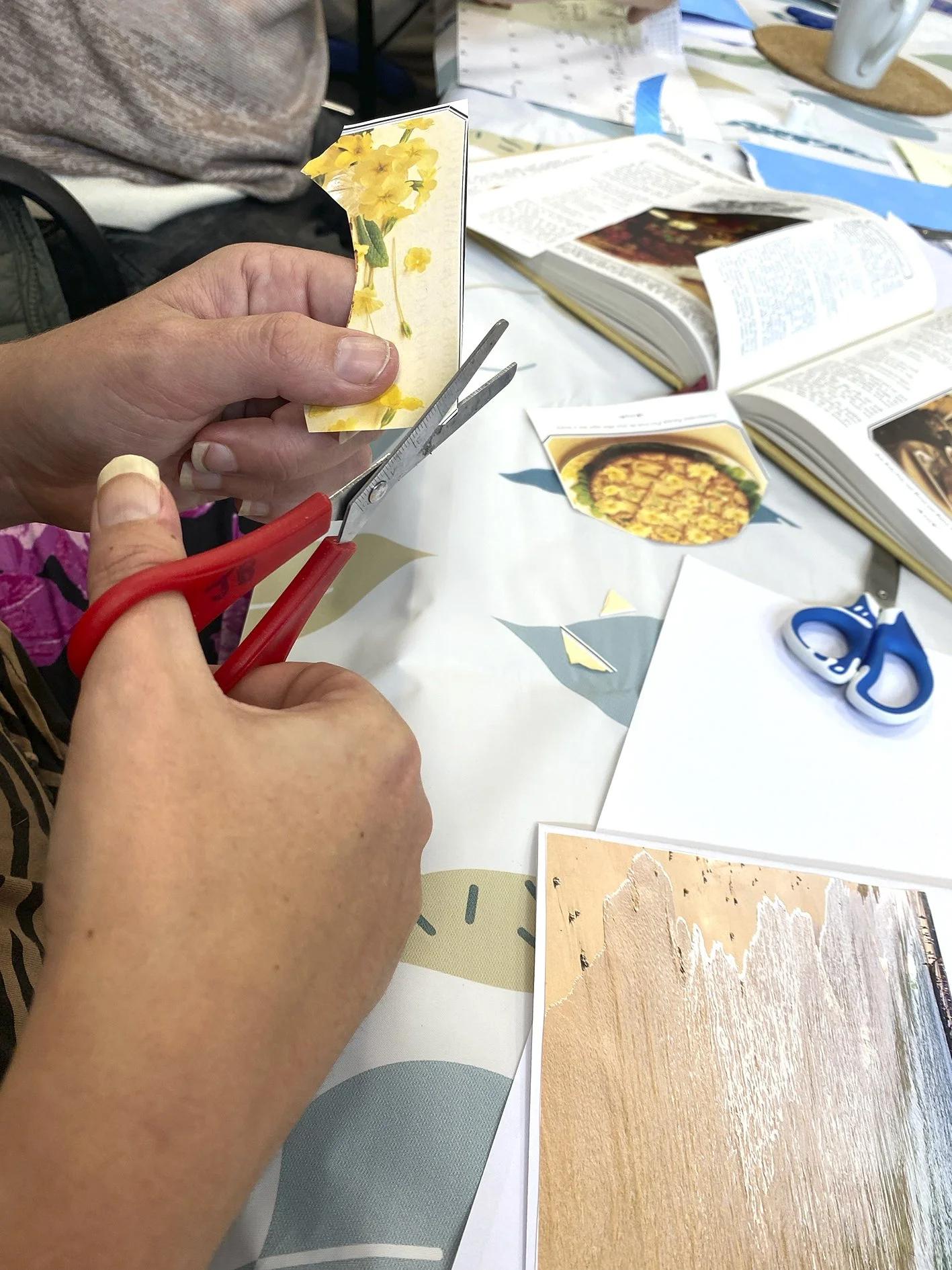
Change the Story is a creative resilience project — a story project, an animation project, a poetry and collage project — but above all, it is a trust project. It began with trust from Catherine Richardson (NHS Senior Programme Manager for Suicide Prevention), who believed that artists and writers could hold space for something as fragile and vital as change. It grew through the trust of the support workers who placed the people they care for into our hands. And it lived in the trust of participants, who arrived to tables scattered with torn books, paper fragments and stickers, and trusted that together we would find a new story. Sometimes that story was an escape; sometimes a shanty of a local heroine battling a siren; sometimes a moment of shattering truth — often all at once. With every story told, belief in the possibility of change grew alongside a new found resilience.
The project changed us too, reshaping how we think about creative practice and care. Working across a year with five very different groups, each with distinct emotional and creative needs but a shared need for safety, expression and resilience. We were able to work differently — slowly, responsively, and with care because we were given rare freedom — and responsibility — to listen deeply and adapt. What emerged was a model shaped with participants, not imposed on them: one that begins by asking what they want and what they fear; that nurtures voice by making room for mistakes; that honours the need for escape as well as challenge; and that knows when to step back and let people lead their own transformation. Change the Story reminded us that creativity, held with care, can be life-changing — for everyone in the room.
“The story of our journey is an extraordinary one. Through every step, we've focused on staying true to the values of the creative process, making space for escape and play, inviting authenticity and wonder, building resilience.”
Carmen + Josie
CARMEN MARCUS + JOSIE BROOKES
The Groups
If U Care Share support people bereaved by suicide, a form of loss that can fracture confidence, connection and resilience. Beginning work in early Spring 2025, this group used creativity to rebuild steadiness and hope, creating The Misunderstood Moth — a story that holds grief while affirming the possibility of transformation.
If You Care Share, Durham
The Care Experienced Team, South Shields brought together a vibrant group of young people with lived experience of care, each of whom were facing intense responsibility and emotional challenges. This group was chosen for their wish to use creativity to strengthen resilience, offering moments of agency, grounding and shared joy within busy, pressured lives.
Young care leavers, South Tyneside Council
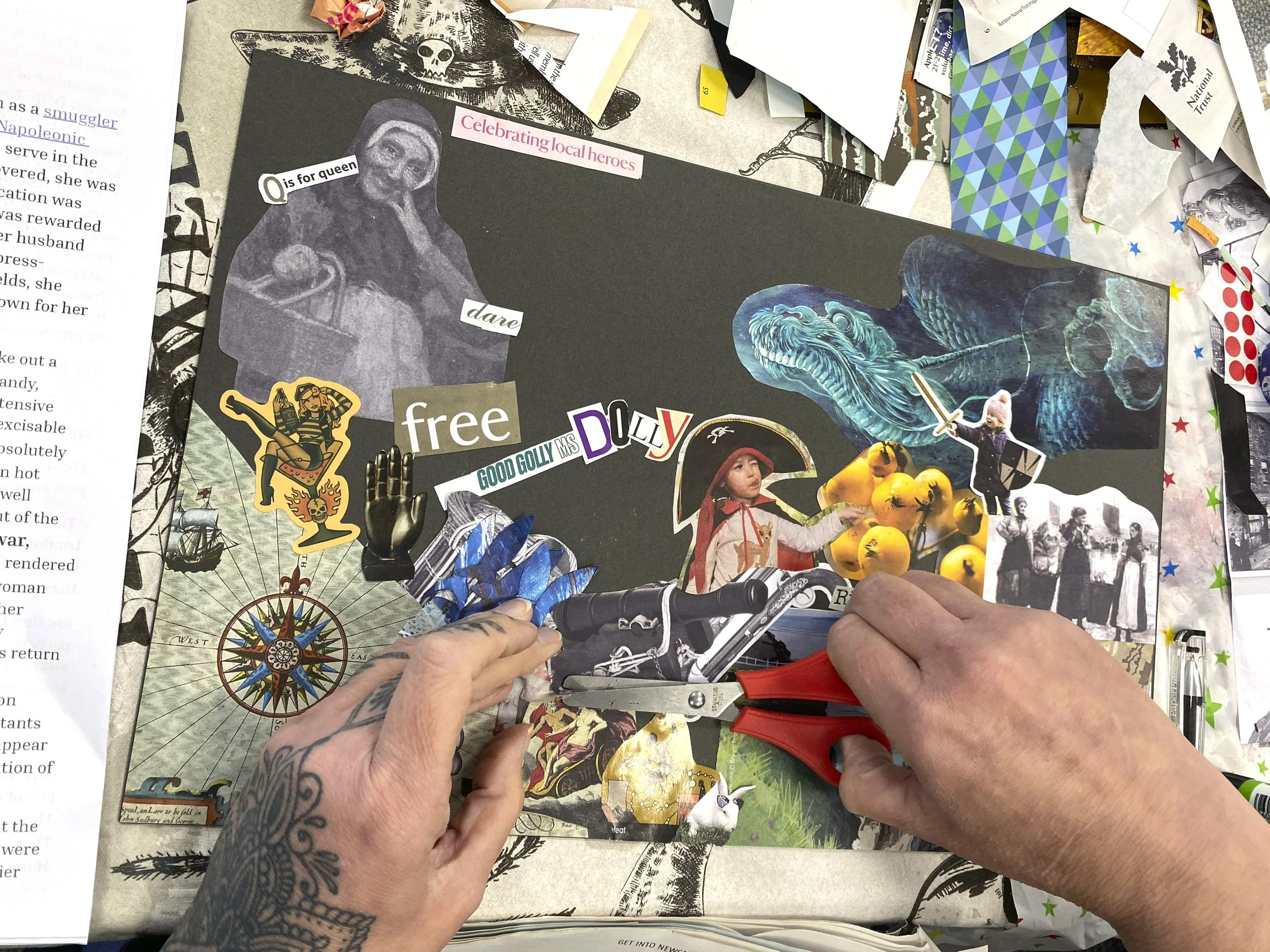
Everyturn supports people whose mental health challenges can erode confidence and increase suicide risk, with a focus on rebuilding stability and resilience. Through shared storytelling and local history, this group created a sea shanty and animation celebrating Dolly Peel — reinforcing voice, pride and collective strength.
Everyturn, South Shields
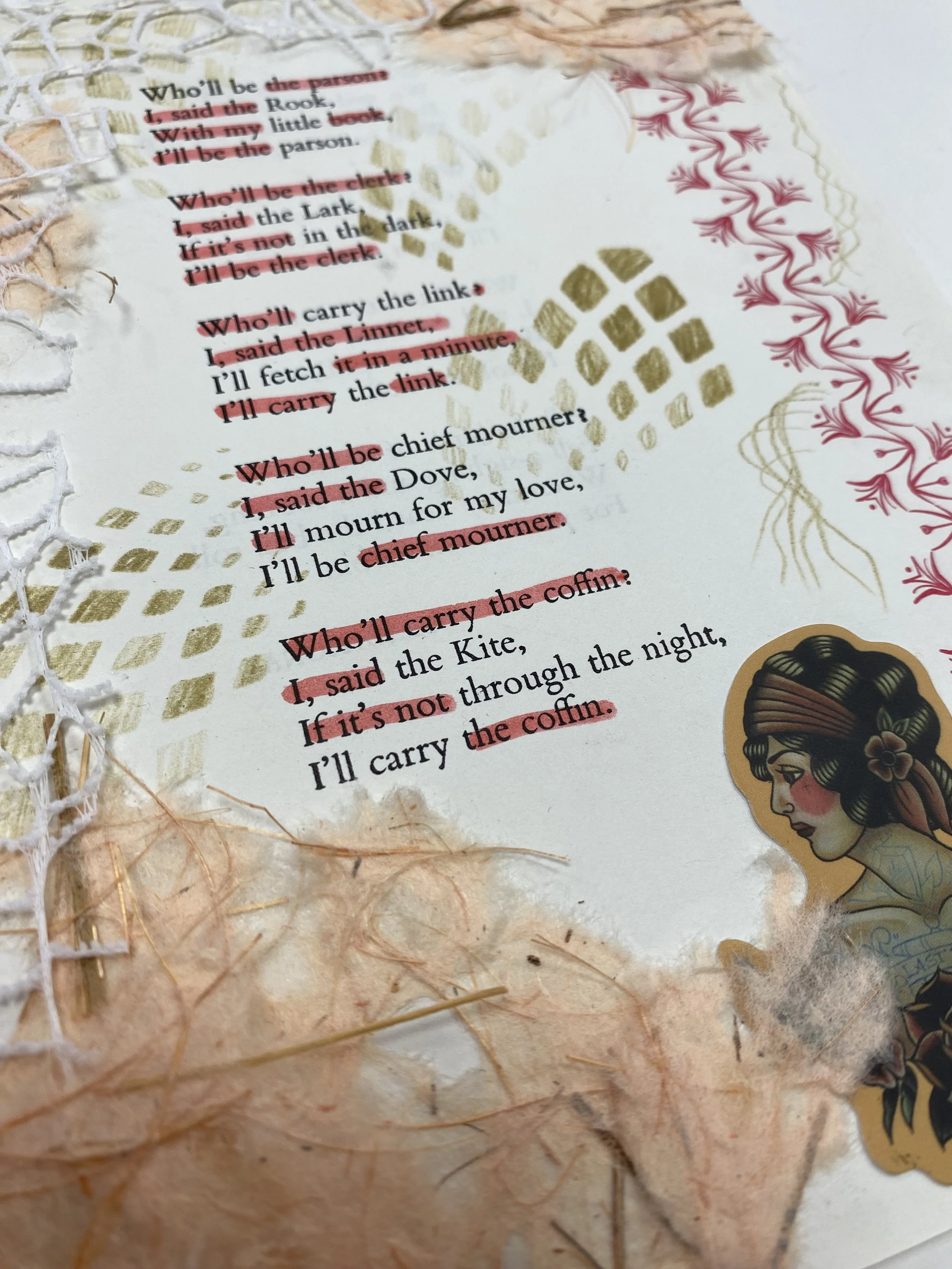
Autism In Mind provide practical and emotional support for autistic adults, who face higher suicide risk linked to isolation and sustained pressure to adapt to non-autistic norms. The project created space to build relational and creative resilience, enabling participants to connect, be understood, and express their experiences through powerful visual and poetic work.
Autism in Mind, Sunderland
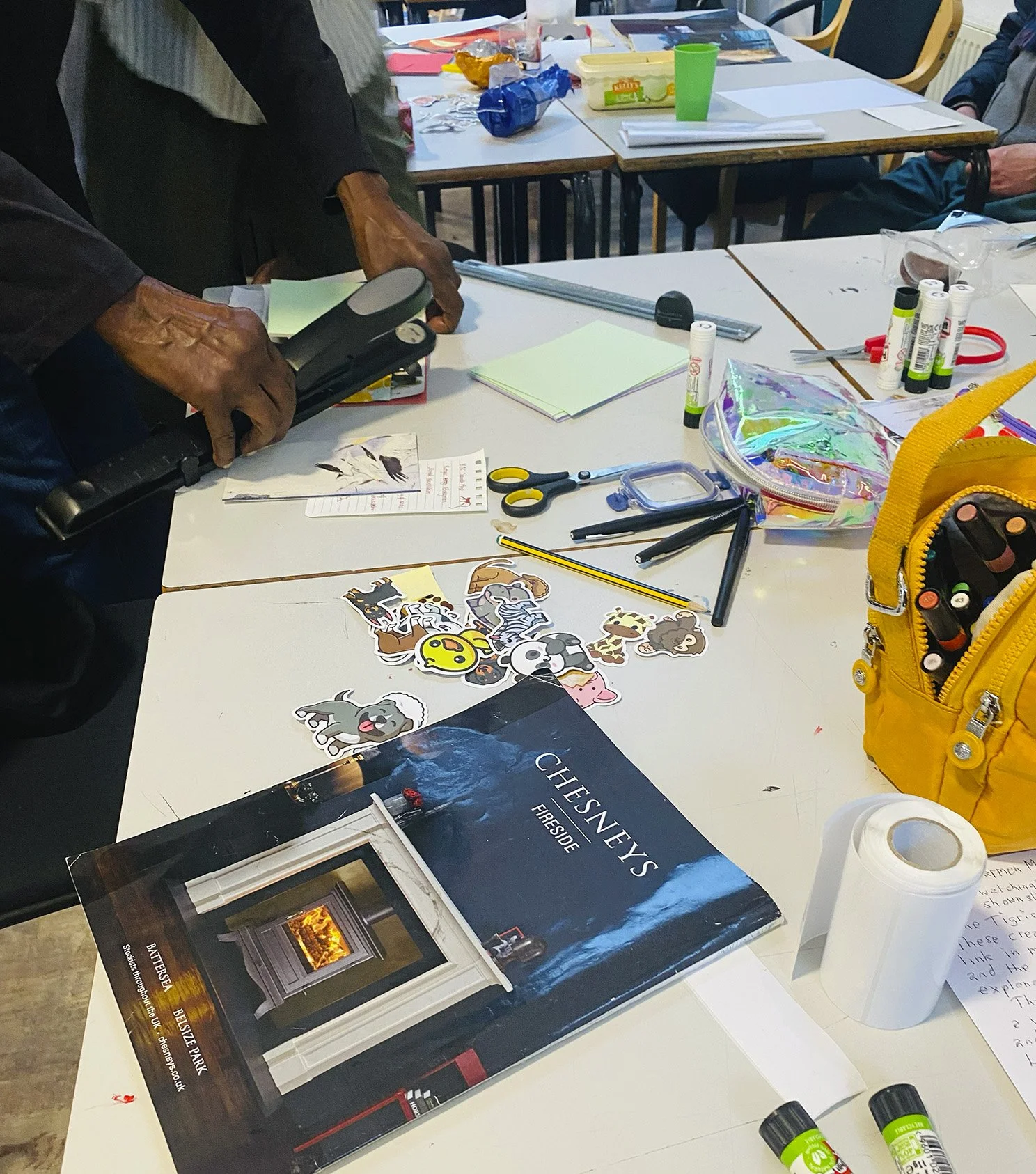
The Waddington Street Centre places creativity at the heart of mental health support and prevention. This group were chosen for their readiness to use creative challenge to strengthen resilience — experimenting across forms to develop confidence, agency and creative expression.
Waddington Street Centre, Durham
The story so far
Change the Story began in February 2025 and runs until February 2026. What follows are our interim findings from the first year of delivery; a full independent evaluation will be published later this year.
Over the past year, we have learned the following about using creativity to build resilience and support suicide prevention:
Trust is foundational. Strong, respectful relationships between creative practitioners and support workers are essential. These partnerships create safety for participants — and we learned that support workers themselves often need creative space and escape too.
Process matters more than product. The final artwork is not the measure of success. What matters is creating conditions where people can play, experiment, tolerate uncertainty and discover that there is no single “right way” to make something.
Ritual creates safety. Repeated opening rituals need to be established, moments that invite participants to leave worries, labels and expectations at the door, and help establish creative spaces as sanctuaries. In these spaces, mistakes often become the beginning of new ideas.
Conversation flows best through making. Talking side-by-side, with hands busy, lowers barriers. Beginning with simple actions like tearing paper, sticking, drawing helps bypass the internal censor and allows difficult thoughts and feelings to surface safely.
Adaptability is essential. Creative activity must respond to the realities of each setting. We worked in bright, open rooms or cramped spaces; with limited light; with babies learning to crawl. We adapted content and approaches continuously, including the fun part of holding babies, so parents could create. There are no ideal settings, but participation requires thinking beyond the limits.
Belonging grows through roles. Offering a wide “buffet” of creative activities allows participants to find their groove. As people share skills, interests and emotional strengths, they begin to feel valued and recognised within the group.
Stepping back invites voice. By around session three, we could step back and allow participants to lead creative direction, with guidance and tools in place. This is the moment when growing confidence turns into ownership — when participants trust that their voice will be heard in its unique, unmasked form.
Together, these elements shape the conditions for creative resilience to emerge. Participants gain lived evidence that they can make choices, lead change and shape new narratives about themselves — an understanding that supports wellbeing far beyond the creative space.
The project is on-going until mid-February 2026 and so the final evaluation is not yet available.
Josie and Carmen have been documenting their reflections of the sessions from the beginning of the project and are collating these reflection diaries. We will include details here when they are available.
Catherine Richardson is also supporting an external evaluation and we will share findings here.
Evaluation
Reflection
Carmen and Josie Q&A
What made you want to do this project?
C: I have personal experience of suicide and mental illness in my family and I know how the reverberations carry on through lifetimes. I have always believed in the power of story to make a difference, to help people imagine change, so I wanted to try.
J: Personal connection with friends and family. A love of working with varied community groups and a belief that creativity can have a huge positive impact on a person’s mental health.
What did you think the project was about?
C: I thought the project was going to be more about direct advocacy, where participants would feedback on their experiences with services.
J: Using writing and visual art to help people use their voices around the subject of suicide.
How has that changed?
C: Half an hour into the first session it became clear that participants did not want to focus only on their negative experiences, that they saw creativity as an opportunity to get a break, to have a space where they weren’t a problem or a symptom or a diagnosis, but could just be. That’s what the creative process offers. That what resilience is, resisting a limiting, rigid narrative of self.
J: There was so much more to the needs and sensitivities of what our roles, and delivery, needed to be. Building a connection and trust was paramount to the success of creating impactful work with all of the participants.
Describe a moment where you had to pivot?
C: I’m an overplanner and something happens in session 4, it’s when participants crave a slow flow state, with the second group I thought, oh no, everything has changed pace, they don’t like it, but Josie and I just went with it, checked in with people and discovered they were enjoying the relaxed pace, leaning into the quiet.
J: When we were working with a group with babes in arms present and Carmen and I have the privilege of holding the babies so their mam’s could get creativity. A joyful pivot!
How has this changed you and your practice?
C: I still over plan, but I don’t follow the plan rigidly, I really understand the importance of opening and closing rituals to hold people, I trust that escape is a valid creative goal.
J: I have learned so much from working with Carmen and co-creating a project model of this kind. We have had to adapt and flex as we go, and approach each group with fresh understanding.
What does creative resilience mean to you now?
C: The ability to imagine things differently, to have faith that force may not get the answers we need but changing path, embracing mistakes, turning the problem upside down can provide insights we didn’t think were possible before.
J: Having an important technique in your back pocket to bring out as and when needed. The ability to tap in to your creative self and the belief that you can use it to your express yourself, emotions and find your voice.
Describe standout memory from the project?
C: I didn’t think one of the participants was able to connect with the writing prompts, I slowed down, reminded everyone that there is no wrong or right path. I breathed, reminded myself to be patient with myself and the process. When I checked in with the participant they had taken their own unique direction and made something so powerful and unexpected it knocked me off my feet.
J: Watching a group member make a decision to do their own narration on their animation. It was like watching confidence building in real time, and magic to be part of.
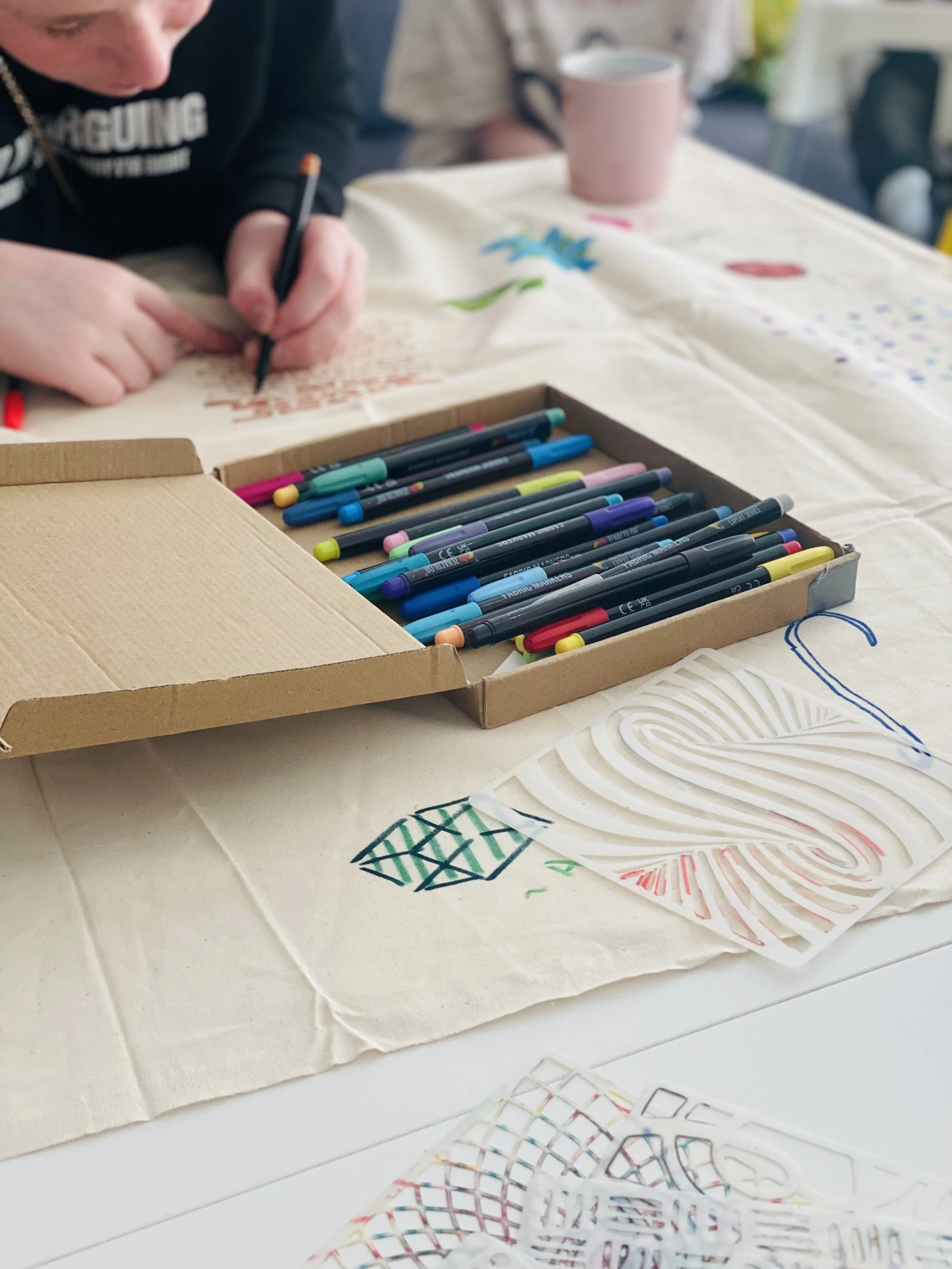
The Change the Story Creative Resilience model
The model is designed to be flexible and responsive, offering a scaffold rather than a prescription, and can be adapted across health, community and cultural settings.
Click for a detailed look in to our project model:
The Story Blanket
What is a ‘Story Blanket’?
Why is it integral to Change the Story’s project model?
Change the Story was a project commissioned by North-East and North Cumbria Integrated Care Board Suicide Prevention, led by Dr Catherine Richardson.
Supported by partner organisations if u care share, South Tyneside Council, Everyturn, Autism in Mind - Sunderland and Waddington Street Centre. Huge thanks to all involved.
For general project queries, please contact Catherine Richardson: catherinerichardson1@nhs.net
For creative queries, please contact Carmen Marcus (writer): carmenmarcuswriter@outlook.com or Josie Brookes (Artist): josiebrookes@hotmail.com